
Half Cell Module Technology
Half cells modules are created by cutting standard solar panels in half, resulting in 120 or 144 half-cut cells, while maintaining the same design and dimensions as conventional modules.
Half-cut cells are typically produced using laser cutting technology. The standard solar cells are cut into two identical half-cells along the direction perpendicular to the main grid lines. These half-cells are then connected in series through welding.
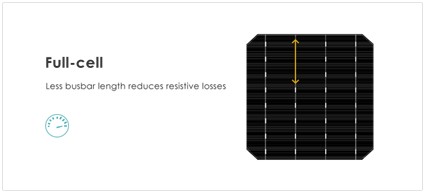
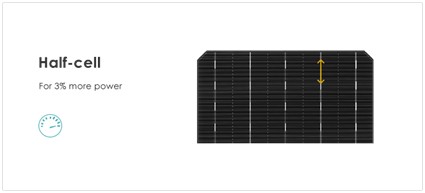
By utilizing half-cut cells, we can achieve higher module efficiency and improved performance.With half the current and double the voltage compared to standard modules, the electrical resistance remains unchanged. This means that we can generate more power while minimizing energy losses.
Similar to conventional modules, half-cut cells are encapsulated using tempered glass, EVA, and a backsheet. This ensures durability and protection against external factors.
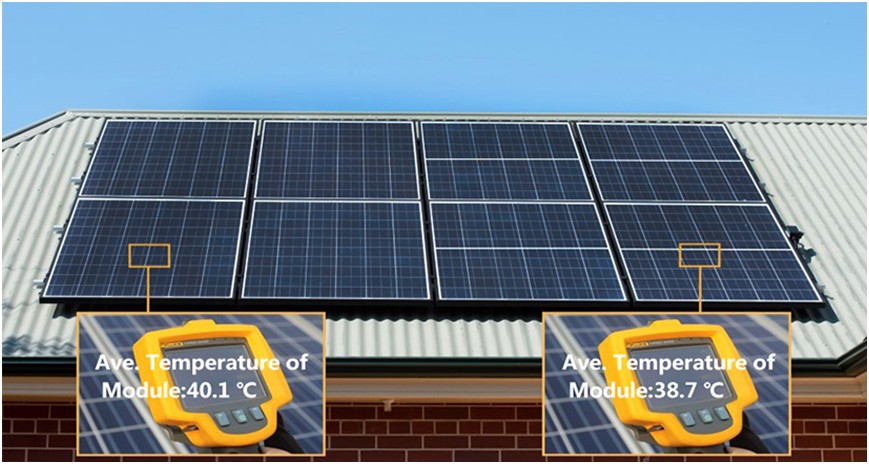
Low Working Temperature
Apple-to-Apple Temperature measured in R&D PV system in Oct.2017, Half-cell module is around ~2 degrees lower.
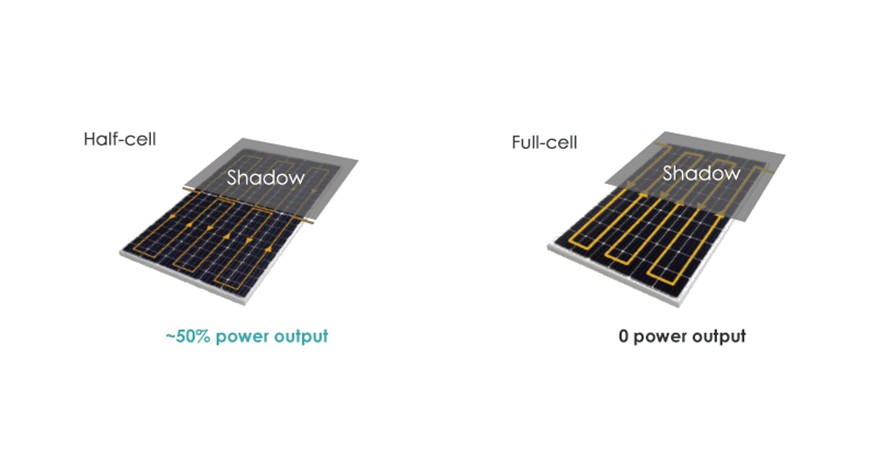
Less Shading Loss
Shading loss of half-cell is much better than normal module in certain shading conditions.
High Output Power
Bifacial Module With Transparent Backsheet Technology
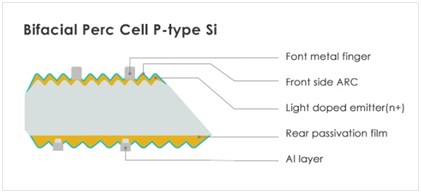
As the name implies, bifacial modules are modules that can generate electricity on both the front and back sides. When sunlight shines on a bifacial module, some of the light will be reflected by the surrounding environment to the back of the bifacial module. This part of the light can be absorbed by the battery, thus making a certain contribution to the photocurrent and efficiency of the battery.
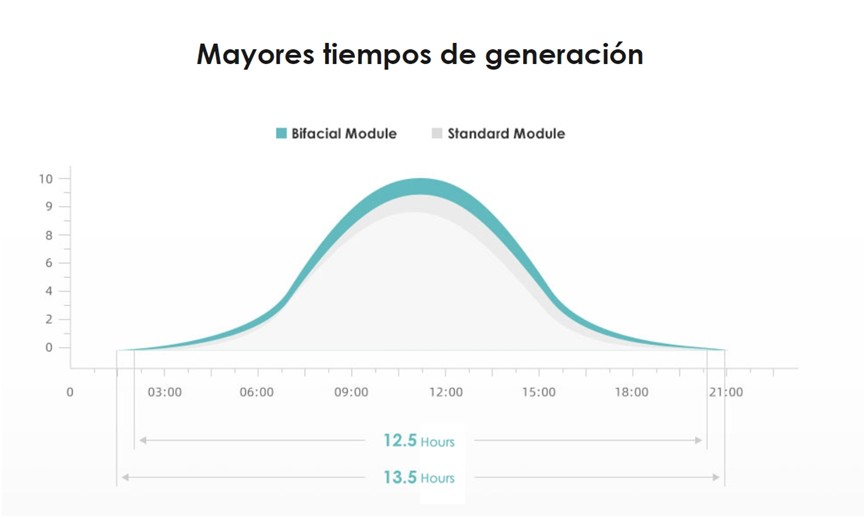
Longer power generation time
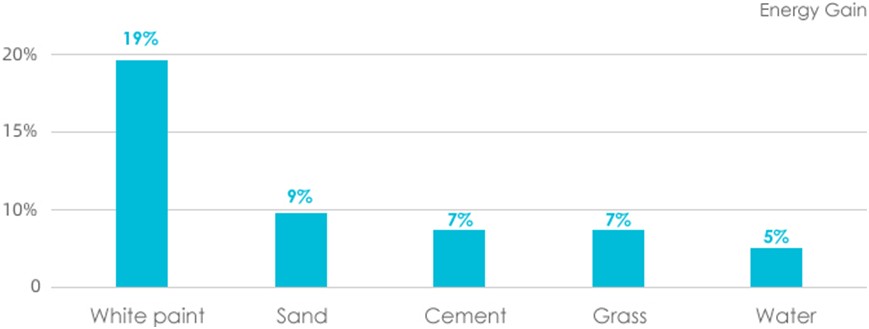
More power generation gain
Up to 20% power gain depending on albedo and PV system design.
Posts you might like:

Subscribe to our newsletter
so that you don’t miss any news!
Please give us a message